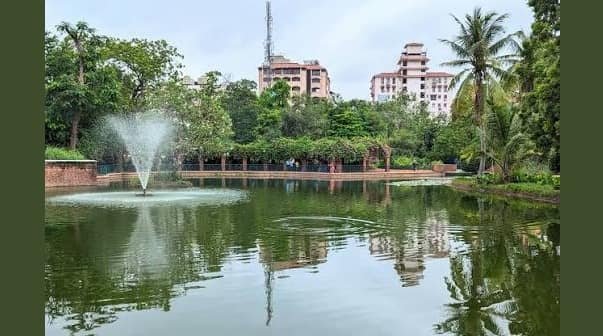
Shalimar Garden is best understood not simply as a flower garden but as a surviving piece of Srinagar’s Mughal landscape. Water runs along its central axis, fountains divide the terraced levels, old chinar trees frame the pathways, and the Zabarwan landscape rises behind the garden. Mughal Emperor Jahangir developed Shalimar Bagh in 1619 for his wife Nur Jahan, turning the site into an imperial summer retreat. Located towards the northeastern side of Dal Lake, the garden remains one of Srinagar’s most important heritage attractions and can easily be combined with Nishat Bagh, Hazratbal and other places around the lake.
Shalimar Garden: Quick Information

| Information | Details |
|---|---|
| Official Name | Shalimar Bagh |
| Also Known As | Shalimar Garden, Farah Baksh, Faiz Baksh |
| Location | Northeast of Dal Lake, Srinagar |
| Union Territory | Jammu & Kashmir |
| Type | Historic Mughal garden |
| Built By | Mughal Emperor Jahangir |
| Developed | 1619 |
| Built For | Empress Nur Jahan |
| Approximate Area | 31 acres |
| Famous For | Mughal landscaping, fountains, chinar trees, terraces and pavilions |
| Distance from Lal Chowk | About 14–15 km |
| Nearest Airport | Srinagar International Airport |
| Distance from Airport | About 20–25 km |
| Nearby Places | Nishat Bagh, Dal Lake, Hazratbal Shrine, Harwan |
| Best Road Approach | Dal Lake/Foreshore Road side |
| Recommended Season | April to October |
Where Is Shalimar Garden Located?
Shalimar Bagh lies on the northeastern side of Dal Lake in Srinagar, towards the Shalimar locality and the Zabarwan foothills.
The Srinagar district administration describes it as being linked historically to Dal Lake through a channel and places it approximately 14 km by road from Lal Chowk, Srinagar’s principal commercial centre.
Its position is quite different from attractions concentrated around central Srinagar. Reaching Shalimar usually means travelling along the Dal Lake side of the city, which makes the journey itself part of a typical Srinagar sightseeing route.
The Directorate of Tourism Kashmir places Shalimar and Nishat among the major Mughal gardens along the Dal Lake corridor.
Why Shalimar Bagh Is Historically Important
The layout reveals how Mughal rulers adapted Persian garden principles to Kashmir’s terrain.
Jahangir developed the royal garden around 1619 and called it Farah Baksh, meaning “the delightful.” During Shah Jahan’s period, the garden was expanded around 1630 under Governor Zafar Khan, with the additional section known as Faiz Baksh.
A central water channel known as the Shah Nahar forms the visual spine of the garden. Water, fountains, terraces, pavilions and rows of chinar trees work together rather than functioning as separate attractions.
Among the garden’s significant architectural elements are the Diwan-e-Aam area, the former Diwan-e-Khas zone and the famous Black Pavilion associated with the upper royal section.
Shalimar Bagh is also part of the Mughal Gardens in Kashmir grouping placed on India’s UNESCO World Heritage Tentative List.
Road Connectivity from Central Srinagar
Road transport is the most practical way to reach Shalimar Garden.
The garden is approximately 14 km from Lal Chowk, according to the Srinagar district administration. Taxis, hired tourist vehicles and local road transport can be used for the journey.
Travellers staying around Boulevard Road or Dal Lake can approach the garden through the lakefront road network.
The Foreshore Road corridor connects the Hazratbal, Shalimar and Nishat areas along Dal Lake and joins the broader Boulevard Road network.
Traffic conditions can vary considerably during peak tourism months, so visitors planning several Mughal gardens in one day should avoid calculating travel time only from distance.
Public Transport and Local Travel
Srinagar does not currently have an operational urban Metro system serving Shalimar Bagh.
For tourists, a taxi or hired car is usually the simplest option, especially when visiting multiple gardens. Kashmir Tourism also identifies taxis, auto-rickshaws and local buses as road options for reaching the Shalimar and Nishat side of Srinagar.
Hiring a vehicle can be particularly useful for a route that includes Shalimar Bagh, Nishat Bagh, Chashme Shahi and Pari Mahal, since these attractions are spread around different sections of the Dal Lake–Zabarwan landscape.
How To Reach Shalimar Garden from Srinagar Airport
The nearest airport is Sheikh ul-Alam International Airport, commonly known as Srinagar International Airport.
The Srinagar district administration places Shalimar Garden approximately 25 km from the airport, while Kashmir Tourism gives a figure of around 20 km. The variation reflects different route and reference-point calculations.
A taxi is the most straightforward option from the airport.
Visitors arriving in Srinagar for a holiday will generally find it more practical to check into their hotel or houseboat first and include Shalimar Garden as part of a local sightseeing circuit rather than travelling directly from the airport with luggage.
How To Reach by Train
The Srinagar district administration lists Srinagar Railway Station approximately 22 km from Shalimar Garden.
After reaching the station, visitors can hire a taxi towards Shalimar through Srinagar city.
Rail connectivity in Kashmir has evolved substantially, so travellers coming from outside the region should check the current railway timetable and through-service availability for their specific travel date rather than relying on older guides that identify Jammu as the only practical railhead.
Nearby Places to Visit
Nishat Bagh
Nishat Bagh is the most natural attraction to combine with Shalimar Garden. It is another historic Mughal garden on the Dal Lake side and was built by Asif Khan in 1633. The Srinagar district administration describes Nishat as the second-largest Mughal garden in Kashmir.
The two gardens differ noticeably in layout, so visiting both is not repetitive.
Dal Lake
Dal Lake is central to Srinagar tourism and lies immediately within the wider Shalimar–Nishat landscape.
Visitors can combine their garden trip with a lakefront drive, shikara ride or an evening around the Boulevard Road side.
Hazratbal Shrine
Hazratbal Shrine lies towards the northern side of Dal Lake and can be included when travelling between central Srinagar and Shalimar.
It is one of Kashmir’s most important religious landmarks and provides a very different experience from the Mughal gardens.
Harwan
Harwan lies farther towards the Zabarwan foothills beyond the Shalimar side. Visitors interested in quieter surroundings can consider extending their journey towards Harwan after visiting the garden.
Chashme Shahi and Pari Mahal
Chashme Shahi and Pari Mahal are farther south along the Zabarwan side of Srinagar.
They are not immediately next to Shalimar Bagh, but all form part of Srinagar’s historic garden landscape. Kashmir Tourism recommends the Mughal gardens collectively as major heritage attractions.
A Practical Mughal Garden Route
Rather than visiting Shalimar Bagh as an isolated destination, travellers can organise the day geographically.
One practical route is to begin with Shalimar Bagh, continue towards Nishat Bagh, and then move south along Dal Lake. Depending on available time, the trip can continue towards the Botanical Garden, Chashme Shahi and Pari Mahal.
Hazratbal can instead be added when approaching or leaving the Shalimar side.
This arrangement reduces unnecessary backtracking and allows visitors to experience how Srinagar’s historic gardens relate to Dal Lake and the Zabarwan hills.
Best Time to Visit Shalimar Garden
Kashmir Tourism recommends April to October for the Mughal gardens, with May and June particularly suitable for flowers and greenery.
Spring brings blossoms and fresh foliage, while summer provides lush lawns and fully green chinar trees.
Autumn creates a very different appearance as the chinar foliage turns shades of gold and red. The Srinagar district administration specifically notes the beauty of Shalimar during both spring and autumn.
Current official tourism information lists typical summer opening hours of around 9:00 AM to 7:00 PM, with shorter hours during winter. Because seasonal timings and ticket arrangements can change, visitors should confirm them before making a time-sensitive trip.
FAQs About Shalimar Garden Srinagar
Q1. Where is Shalimar Garden located?
A. Shalimar Garden, or Shalimar Bagh, is located on the northeastern side of Dal Lake in Srinagar, Jammu & Kashmir. It is approximately 14 km by road from Lal Chowk.
Q2. Who built Shalimar Garden in Srinagar?
A. Mughal Emperor Jahangir developed Shalimar Bagh in 1619 for his wife Nur Jahan. The garden was later expanded during Shah Jahan’s reign around 1630.
Q3. How far is Shalimar Garden from Srinagar Airport?
A. Official sources place Shalimar Garden roughly 20–25 km from Srinagar International Airport, depending on the route and reference point used. A taxi is the most convenient option for the journey.
Q4. Which places can I visit near Shalimar Garden?
A. Nishat Bagh, Dal Lake, Hazratbal Shrine and Harwan are among the most convenient nearby places. Chashme Shahi and Pari Mahal can also be included in a longer Mughal-garden sightseeing route.
Q5. What is Shalimar Bagh famous for?
A. Shalimar Bagh is famous for its Mughal-era terraced design, central water channel, fountains, historic pavilions and chinar-lined landscape. It is one of the most important surviving Mughal pleasure gardens in Kashmir and forms part of India’s UNESCO tentative listing for the Mughal Gardens of Kashmir.